Overview
0:00:14Overview
Gratitude gARden was made in 2020 by a team of artists, designers, filmmakers and developers spread across New York, Vienna, Singapore and Mexico City.
I was the project's director and creative technologist.
The garden
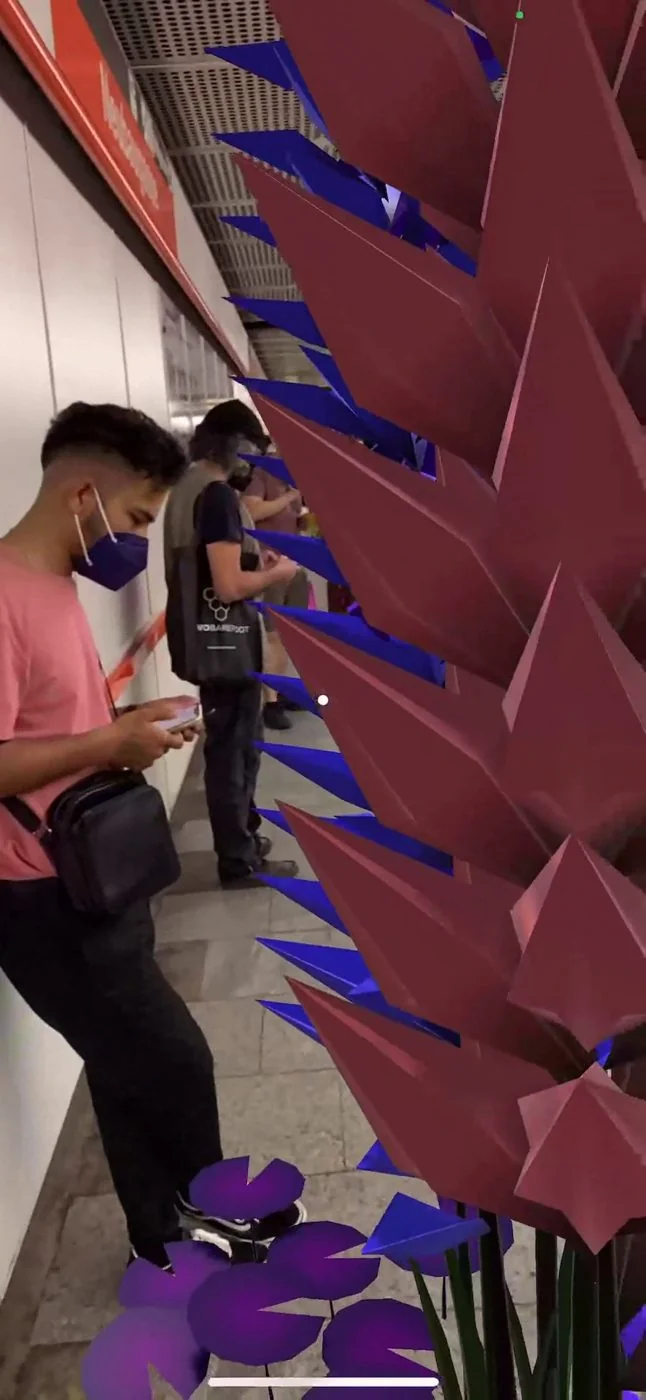
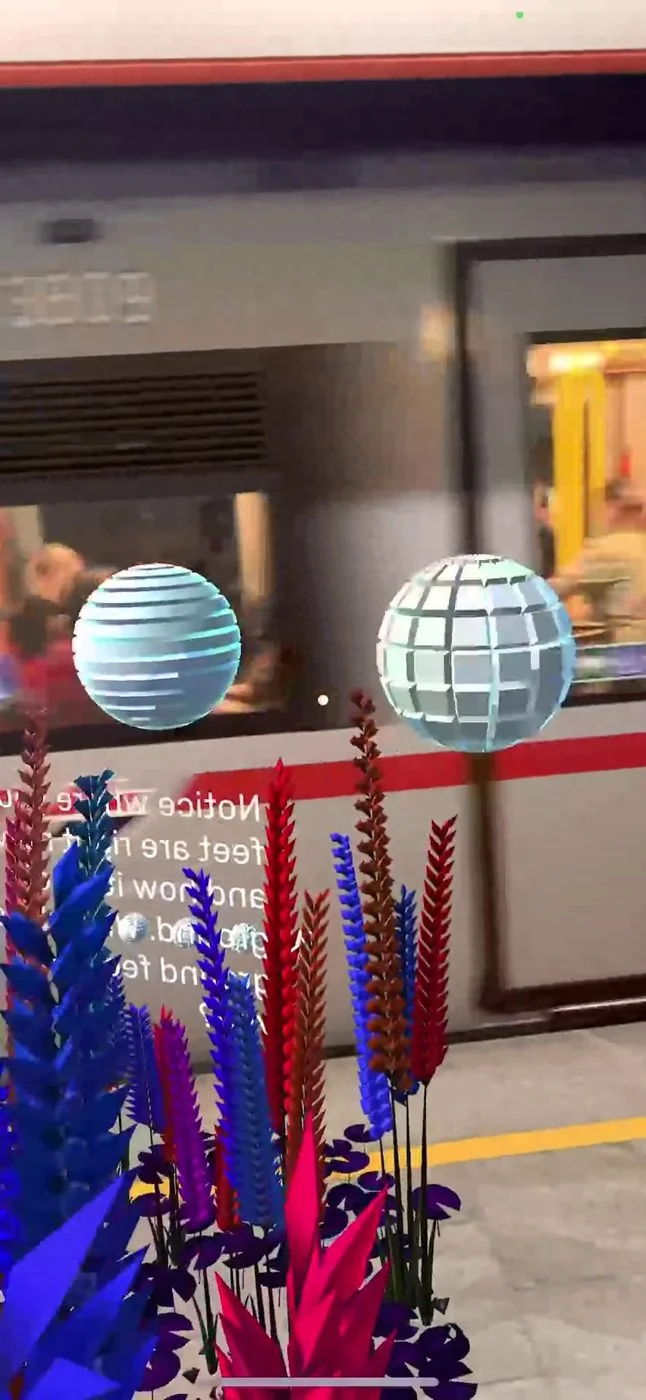
0:00:27On the platform
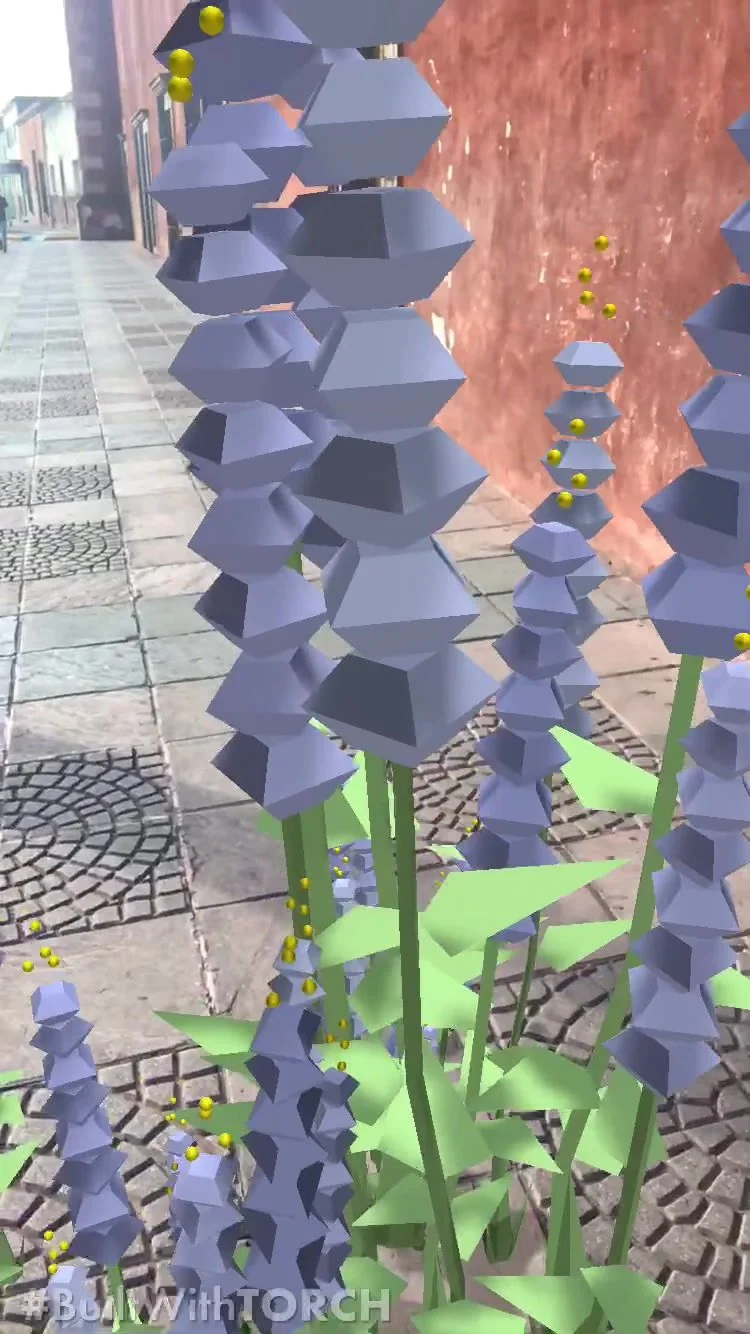
In the street
Indoors
The idea
0:01:46The idea
“We should try by all means to be as grateful as possible. For gratitude is a good thing for ourselves, in a sense in which justice, that is commonly supposed to concern other persons, is not; gratitude returns in large measure unto itself.” Seneca, Roman philosopher, 65 AD
What is it?
Amidst the backdrop of an age of anxiety and worry culture, the gARden is an AR art installation of a communal virtual garden that transforms the intangible feeling of connecting with oneself and others into a 3D experience whereby people from all walks of life can plant their introspection in the form of a flower in a visually stimulating garden that other people can interact with.
We wanted to create an experience that encourages people to be introspective, thoughtful, and emotionally connected in AR, allowing people to explore perspectives while also being in tune with themselves.
Why is this important?
Until recently, the traditional “mental disease model” of psychology focused on how one can relieve suffering rather than how one can amplify well-being. Reverse-engineering the science of happiness, modern models utilize simple methods, such as revisiting a pleasant memory or expressing our gratitude towards others, as a way to nudge our mentality towards a healthier well-being.
The gARden, thus, is a project that aims to provide a safe space for people from all walks of life to have a meaningful moment reserved for eliciting introspection.
Why AR?
With the help of AR, we are able to provide a communal aspect to introspection, whereby individuals are physically in a space where they see introspection from diverse people at different points of time. We are at the forefront of technology where we can build new worlds of connection and redefine the way people engage with one another. We want gARden to be a space where people can interact and connect in ways that aren’t possible offline.
What introspection does
From the team's pitch deck, June 2020:
- Awareness & empathy. Introspection rewires the brain by kick-starting production of dopamine and serotonin from the brain stem. This drives pro-social behaviors and improves awareness and empathy in the self and others.
- Cognitive and behavioral benefits. Research suggests that when we introspect, we are more confident, more creative and more emotionally intelligent. We make sounder decisions, build stronger relationships and communicate more effectively.
- Happiness. Internal self-awareness is directly correlated with higher emotional intelligence and happiness.
- Individual reward and motivation. Introspective thoughts activate reward centers in the brain (nucleus accumbens and ventral tegmental area) that elicit rewarding feelings similar to eating good food and listening to your favorite music.
Inspiration
From the team's list of inspiration links:
- Building Hopes, Giorgia Lupi
- Into the Light, Sougwen Chung
- Wildflower, a digital flower generator by Resn
- A VR garden painted in Tilt Brush by Miss Led
The journey
0:03:49The Gratitude Journey
- John opens the app and sees the intro (a welcome and mental health information).
- John is given 3 prompts and types his answers.
- The app generates a customized flower, and John is given it.
- John plants it at x, y coordinates, which activates one section of the pre-programmed garden to show.
- John can plant at most 3 flowers within an hour.
- John can walk around the garden to view other flowers planted by other users.
- John clicks on Sarah’s flower and sees a pop-up of her gratitude.
- John resonates with Sarah’s flower and decides to water it.
- After John waters it, he gets a reward: a butterfly comes to him to deliver mental health information.
- Sarah gets a notification on her phone that someone watered her gratitude flower.
The app
Growing a flower
0:04:53Answers without words
The prompts ask about universal experiences: love, fear, hope and dreams. Where words fail to capture the nuances of an emotion, the answers come as a colour, a texture, a shape or an element, so that anyone can answer, in any language.
In the engineering brief, each answer sets one part of the plant, and the answers are given with multiple choice and sliders.
The flowers
An early mapping gave each kind of gratitude its own flower: relationships were bluebells, health and food were daffodils, weather and location were tulips.
How it grew
0:05:31The Gratitude Visit
The project began as The Gratitude Visit, a proposal dated February 25, 2020, with Sarah Lee Choi and Sandra Soueid as project leads: an AR installation of a communal virtual garden where people plant their gratitude in the form of a flower that others can interact with.
Over the following months it became the gARden. The team grew, the flower came to hold introspection as well as gratitude, and the garden, first imagined for one installation space, was planned for many places at once.
One garden, everywhere
From the pitch deck, June 2020:
A singular garden spread globally. The gARden lives on plazas in front of museums. Even though the physical location differs, the virtual garden is the same for every user.
My role
As director and creative technologist, I led the development of the AR by rapid prototyping features, narratives and user experiences. I defined the product requirements and road map for a virtual AR exhibition, and facilitated conversations between engineering and design.
The credits · back of the box
Gratitude gARden
- Director & Creative Technologist
- William Yao
- Director & XR Storyteller
- Arne Nostitz-Rieneck
- Multi-media Artist & Scientist
- Sarah Lee Choi
- Experience & XR Designer
- Mario Gabric
- XR Consultant & Developer
- Lionel Chok
- Filmmaker & XR Enthusiast
- Jean Prytyskacz
- Filmmaker
- Susana Conejo
- Producer, Consultant
- Tony Mayes
Augmented reality · iOS app · Unity · Torch · Blender · Figma
The original documentation, on thewilliamyao.com ↗Not rated · Reading time 6 min