
Overview
0:00:09Overview
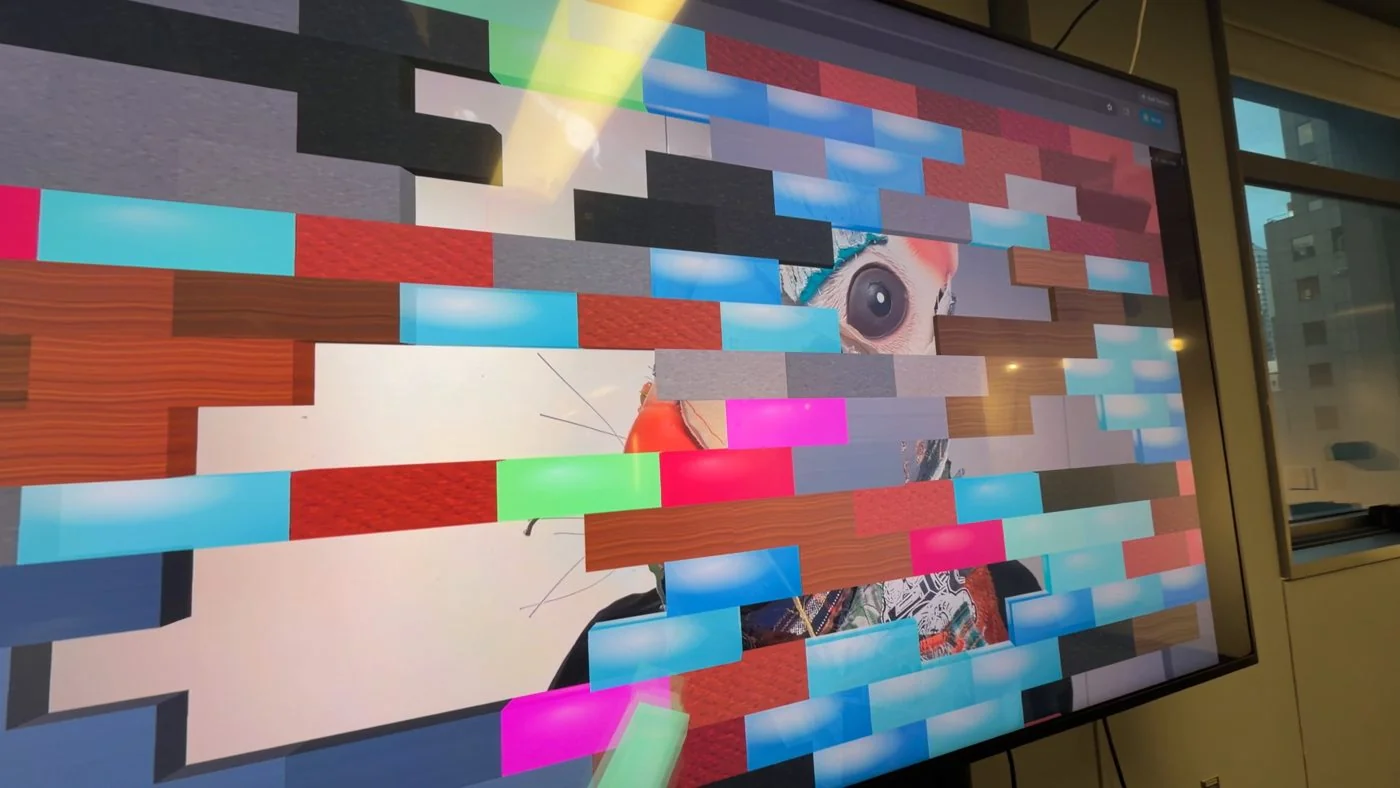
Behind the Bricks is a brick wall projected in Dumbo that anyone can break with a phone. You open behind.nyc, tap a brick and shake your phone. The bricks crack and fall on the big wall, and behind them a rat is at work.
It was one of four interactive works in the Dumbo Projection Project, Volume Seven, shown on the Manhattan Bridge and the BQE wall in Dumbo from May 1 to May 31, 2026. It is by Michael Culleton, Jaye Du, William Yao and Seungmin Yeon, and was made at NYU ITP with Professor Gabriel Barcia-Colombo.
The wall
0:00:40Behind the Bricks
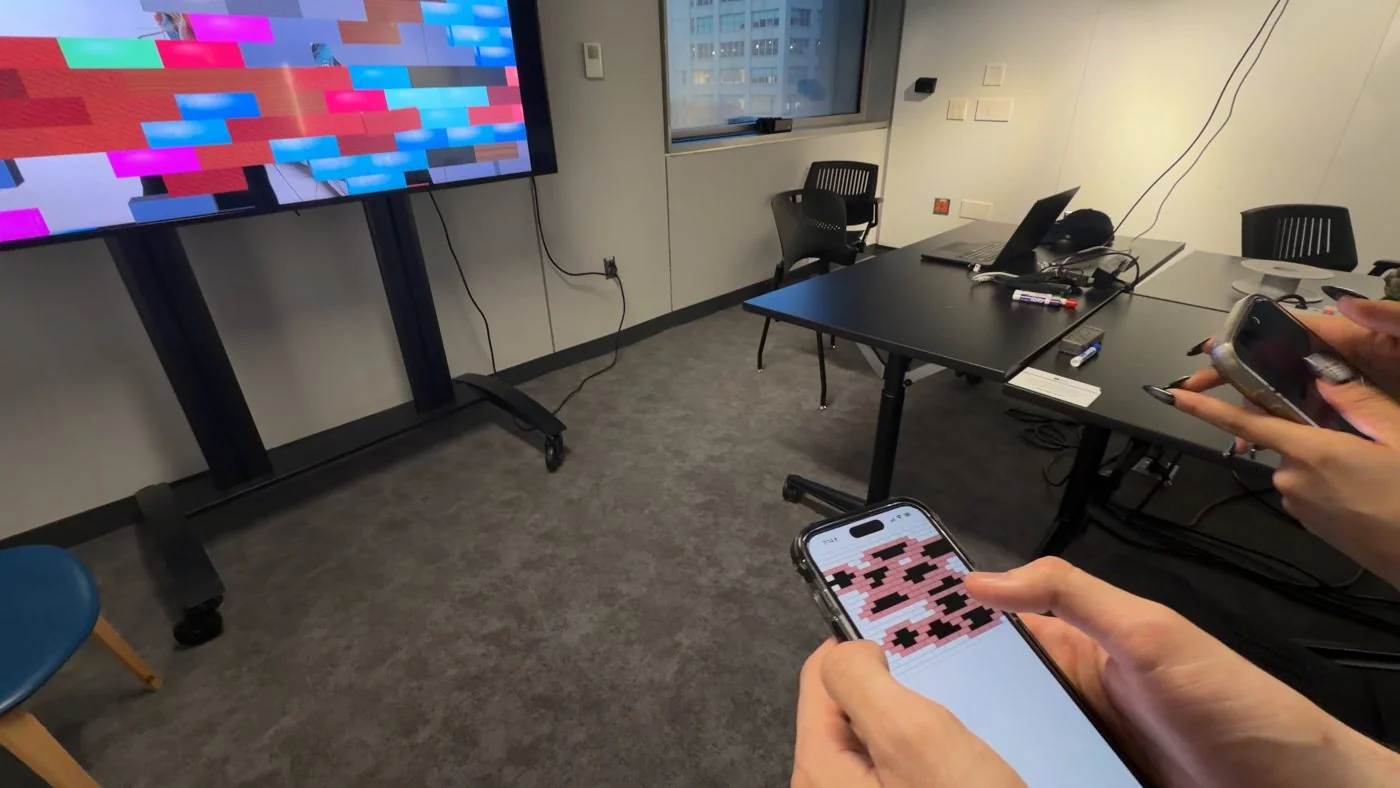
The wall is shared. Every phone that opens behind.nyc is connected to the same wall, and everyone sees every crack as it happens, on the projection and on their own screen.
Each hole opens onto a rat video. When the clip ends, the bricks go back into place and the wall is whole again.
The Dumbo Projection Project
The seventh volume of the Dumbo Projection Project was called Dumbo: Past, Present & Future. Team Dumbo, the Dumbo Business Improvement District, presented it on the Manhattan Bridge (Plaza side) and on the BQE wall in Dr. Susan Smith McKinney Steward Park, Wednesdays to Sundays from dusk to 11 p.m.
It was the first volume in which every work was interactive. Four works, all made with graduate students from NYU ITP, played in a loop at both sites: SubWave, Have You Eaten Yet?, Shadow Theater and Behind the Bricks.
“Behind the Bricks … offers a playful, interactive look beneath Dumbo’s facade, allowing viewers to digitally ‘chip away’ at walls to reveal unexpected stories from the neighborhood.” (BK Reader, April 10, 2026)
“Participants digitally ‘chip away’ at the brick wall to uncover video stories told by rats.” (Brooklyn Paper, April 28, 2026)
The rats
0:01:35Who lives behind the wall
Eight rat clips play in the holes. Each one shows a performer in a white rat mask, navy coveralls with reflective stripes and a tool belt, cut out on a transparent background so only the rat shows in the hole. The clips are named 007 drill, fruity drill, hammer back, hammer front, rope 1, rope 2, vacuum and witch. They run from about 15 to 35 seconds.
Behind the clips runs one big rat video, the background that every hole opens onto. A new hole gets a rat that is not already on screen whenever one is free.
How it works
0:02:27From your phone
The phone page shows the behind.nyc logo, a small copy of the wall and a rat peeking up from the bottom of the screen.
- Tap a brick. A “SHAKE!” prompt appears.
- Shake the phone for three seconds. The bricks around the one you tapped crack a little more as you shake.
- The cluster breaks and falls on the projected wall, and a rat clip plays in the hole.
The phone pushes back while you shake: Android phones vibrate harder and harder, and iPhones play a short pulse of sound instead (with silent mode off). iPhones ask for permission to read the motion sensor every time the page loads. A cluster left alone for 10 seconds falls anyway if it is more than half cracked, and resets if it is not.
On the wall
The projector page draws the wall in three.js: 262 bricks of uneven sizes in 18 rows, traced from an SVG, with a map of which bricks touch. Bricks next to an open hole or a cracking cluster are locked, so the holes stay apart.
A QR code in a spray-paint style, which opens behind.nyc, sits in the bottom-right corner of the wall. A cluster can’t start from the bricks under it, and the wall never cracks them on its own. When nobody has tapped a brick for 30 seconds, the wall starts cracking on its own, one hole at a time, until someone taps a brick again.
Running on its own
The wall also has versions that play without phones:
- A wide wall, 6,424 by 1,080 pixels, with its own grid of 32 by 14 bricks. It picks a brick, grows a cluster, shakes it, drops it and plays a rat, with up to 10 holes open at once and never two holes with the same rat.
- Four split projector pages, kept in step by one clock on the server, that open the same holes at the same time.
- A render tool that records the wide wall to a video file in a browser with no screen.
Testing
0:04:04Test night in Dumbo
On the night of March 27, 2026, the class tested its work in Dumbo. A giant white rat was projected on the stone wall of the Manhattan Bridge, above the plaza.
Play test
On March 31, 2026, the wall ran on a large screen for a play test, with phones as the controllers. This early version had colored, textured bricks.
The credits · back of the box
Behind.nyc
- Created by
- Michael Culleton, Jaye Du, William Yao and Seungmin Yeon
- Professor
- Gabriel Barcia-Colombo, NYU ITP
- Shown in
- The Dumbo Projection Project, Volume Seven (Team Dumbo, May 2026)
Interactive projection · 2026 · three.js · Socket.IO · Node.js · Phone motion sensors
Tape 6 of 9 · Not rated · Reading time 5 min