Overview
0:00:16Overview
Take a Seat is an interactive film and performance exhibition set around a reimagined Asian banquet table — round, grand, laden with warm food on a lazy susan, and simmering with everything families carry but rarely say aloud.
The piece explores the tension of a universal diaspora experience: the guilt of leaving, the longing to return, and the strange ache of sitting at a table that still feels like home even when you've become a stranger to it.
The exhibition unfolds through projection and sound art in three circular chapters — Reunion, Chaos, and Longing — and audiences are invited to literally take a seat at the table and become part of the meal.
It was made at NYU ITP in spring 2026 by William Yao, Siddhi Mandora, Tenzin Siddon and Chris Toh. William built the wireless chair system that tells the table who has sat down.
The table
0:00:54Three chapters
Act 1. Reunion
The table is being set. Reunion captures the quiet rituals of preparation, the warmth that diaspora children have learned to recognize as love.
Act 2. Chaos
A family in discord that is not villainous nor cartoonish, but achingly human — people who love each other pulled apart by generational and geographical distance.
Act 3. Longing
Everything else falls away. A single phone sits spotlit at the center of the table, playing a voice memo from a grandmother asking, simply, whether anyone is coming home for New Year's dinner.
Five figures, five empty chairs
Three slides in the pitch are headed The Round Table 宴, The Estranged Hollows 虚 and Discombobulation 闹, and the third sets the scene like this:
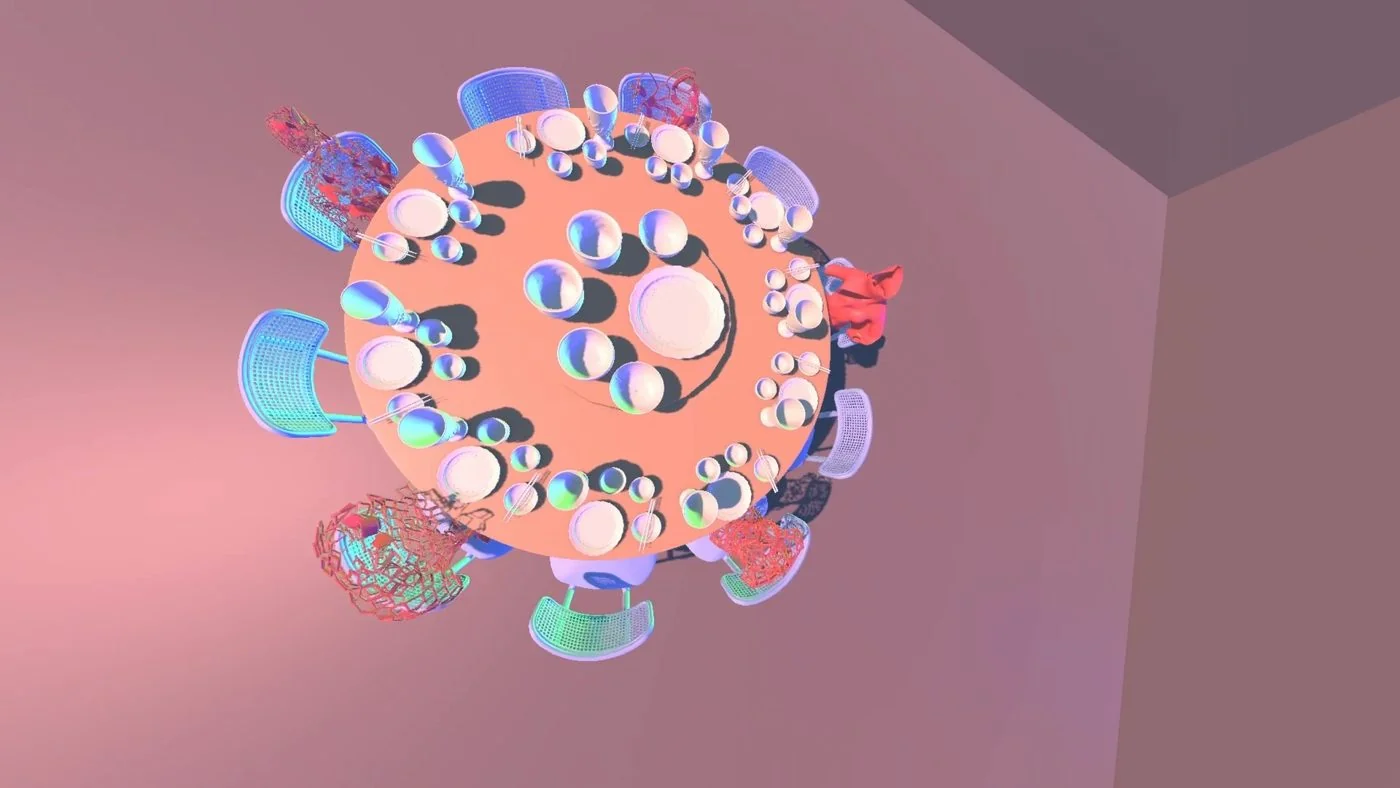
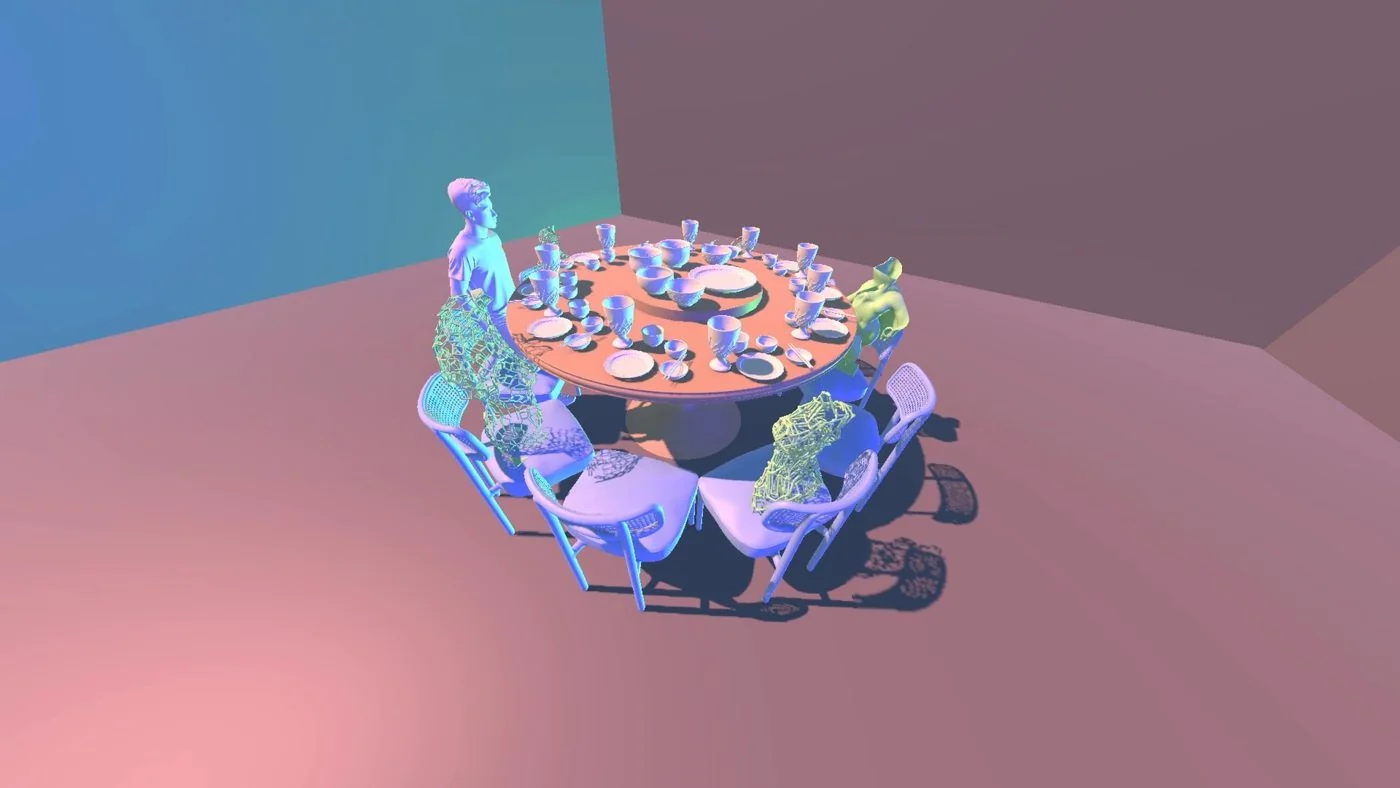
5 family members, in the form of physical statues constructed with their traits, are sat around the table. There are 5 audience chairs placed between each of the characters. On top of the table are 10 plates placed before each chair.
The projection on the table is illuminating the room just enough to make out the characters and the chairs.
The family members' statues have speakers in them. When a member from the audience sits on the empty chairs, the two characters from beside them will be lit with DMX from the ceiling.
Not knowing
The pitch closes on this:
Take a Seat does not seek to resolve the contradiction at its heart — only to hold it with honesty and tenderness. So many of us have sat at tables like this one, feeling the pull of two worlds at once, and never quite had the words for it. … A space where that feeling is not just acknowledged but truly seen — where an audience can sit down, share a meal, and leave knowing they are not alone in the not knowing.
The voices
0:02:22The scripts
The family at the table speaks in recorded voices. Grandpa, Father and Mother each have a script, two of them headed "Familiar but Estranged", and one combined script sets every part side by side, in Chinese with English translations. The scene is one family dinner at a restaurant table, and it starts with who sits where and the dishes arriving:
红烧肉,藕汤,农家小炒肉,剁椒鱼头,菜苔。
We've got braised pork belly, lotus root soup, farmhouse stir-fry pork, chili fish head... and some greens. (Mother)
嗯,每逢佳节倍思亲。
Every holiday makes you miss home even more. (Grandpa, to himself)
That line is from Wang Wei's Tang dynasty poem "Thinking of My Brothers on the Double Ninth", and it comes back more than once during the meal. Sound cues are written into the scripts too: chopsticks being picked up, a slam on the table, a cup shattering.
The chairs
0:02:58One board per chair
Five wireless sender boards (one per chair) detect when a seat is occupied and send their state to a single receiver board via ESP-NOW. The receiver relays all chair states to TouchDesigner over USB serial.
[Chair 1 - ESP32 + Sensor] ──┐
[Chair 2 - ESP32 + Sensor] ──┤
[Chair 3 - ESP32 + Sensor] ──┤──► ESP-NOW (wireless) ──► [Receiver ESP32] ──► Serial USB ──► TouchDesigner
[Chair 4 - ESP32 + Sensor] ──┤
[Chair 5 - ESP32 + Sensor] ──┘
Every chair runs the same code. Only its number changes from board to board, so each board is flashed, labelled and set aside in turn.
Why ESP-NOW?
ESP-NOW is a peer-to-peer protocol built into the ESP32 chip. It requires no WiFi router, making the system fully independent of venue network infrastructure — critical for a live exhibition environment.
Hardware
- Prototype: three ESP32-WROOM-32E boards, two as senders and one as the receiver
- Final: five Seeed XIAO ESP32C3 boards, one in each chair, each on a 500 mAh LiPo battery
- One ESP32 DevKit as the receiver, plugged into the laptop
- A momentary button or pressure sensor in each chair
Into TouchDesigner
The receiver sends one comma-separated line to TouchDesigner every time a chair changes. 1 means a seat is taken, 0 that it is empty.
0,0,0,0,0   ← all chairs empty
1,0,0,0,0   ← chair 1 occupied
1,1,0,0,0   ← chairs 1 and 2 occupied
In TouchDesigner a Serial DAT reads the line, a Convert DAT splits it into five columns, and five Select DATs and five DAT to CHOPs turn each chair into a channel the rest of the network can use. The first working version, from the chairs through the receiver into TouchDesigner, went into the repository on April 26, 2026.
The demo
0:03:58Demo play
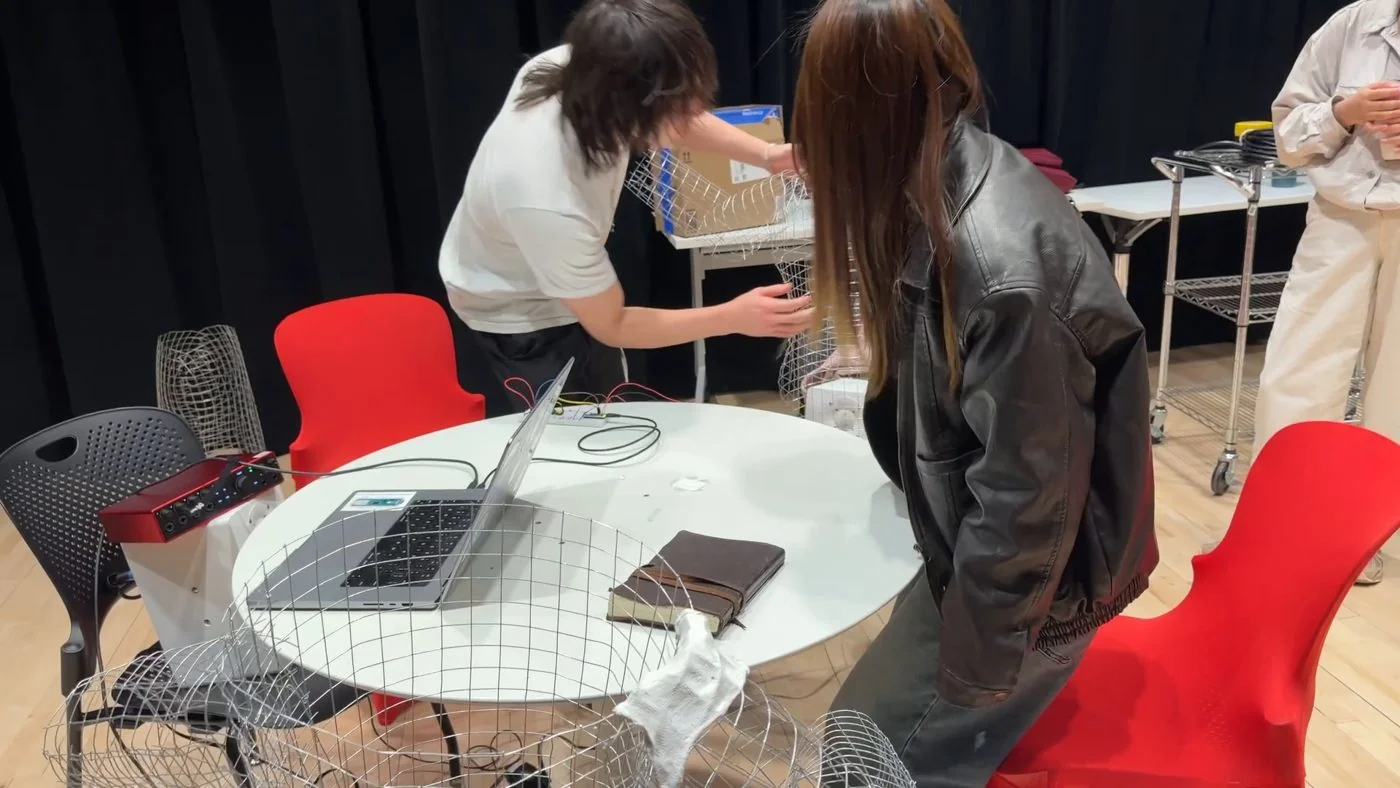
Before the full build, the team ran a demo play at a round table with red chairs, wire-mesh figures, speakers, a laptop and an audio interface. Sitting down switched on the speakers for Mom and Grandpa. A caption in the video says the full exhibition was being built in the ballroom on the weekend of May 1.
The full table
The demo video ends on a 3D model of the whole table: place settings around a lazy susan, the chairs, and the wire-mesh family figures.
The credits · back of the box
Take a Seat
- Created by
- William Yao, Siddhi Mandora, Tenzin Siddon and Chris Toh
- Wireless chair system
- William Yao
- Made at
- NYU ITP, spring 2026
Interactive film and performance · 2026 · Five ESP32 chairs · ESP-NOW · TouchDesigner · Projection and sound
Tape 7 of 9 · Not rated · Reading time 5 min